

 The Family Blueprint: Affordable Ways to
Buy and Move Into Your Next Home
maintaining stability amid boxes, bedtime routines, and budgets. Young families often face the dual challenge of affordability and functionality: How to find a home that fits your finances and your family’s rhythm.
The Essentials in Brief
● Budget before browsing. Know your ceiling, not your dream number.
● Factor in “hidden” costs like childcare, utilities, and commuting.
● Pre-approve early to understand your real buying power.
● Pack with intention — declutter before you move, not after.
● Protect your investment with practical coverage options.
● Plan kid logistics (schools, daycare, parks) before the move, not after.
House-Hunt Smarter to Stretch Every Dollar
1. Get hyper-clear on your budget. Start by calculating your full monthly spend:
groceries, insurance, streaming, and even coffee runs. Aim for housing expenses (mortgage
+ taxes + insurance) under 30% of your monthly income.
2. Prioritize needs over dreams. List your top five must-haves. Maybe it’s a fenced yard,
good schools, or an extra room for a nursery. Everything else, like quartz countertops or
walk-in closets, goes in the “nice to have” column.
3. Explore nearby neighborhoods. Sometimes the difference of five miles equals tens of
thousands in savings. Use local forums or family Facebook groups to get real-world
feedback on safety, commutes, and schools.
4. Time your purchase smartly. Spring and summer listings attract more families (and
competition). Consider winter or fall, when sellers may be more flexible on price.
Typical Home-Buying Costs (and Where You Can Save)
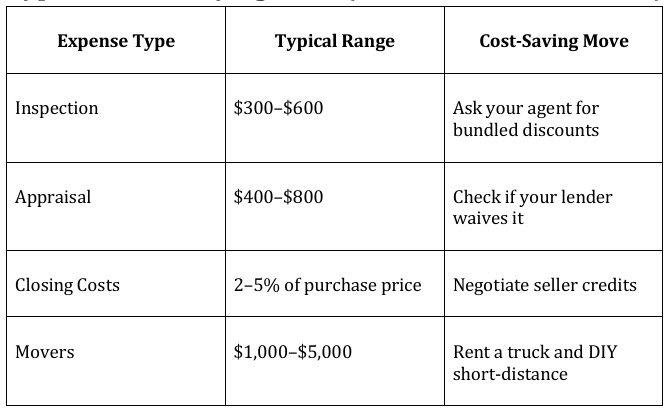
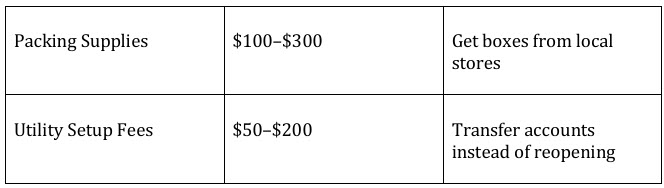
Keep the Move Affordable (and the Kids Happy)
Moving with kids can feel like managing a mini logistics company. Here’s a family-focused
checklist to make the process smoother:
Family Move Checklist
☐ Involve the kids early — let them pack a “favorites box”
☐ Schedule move-out around nap times (trust us)
☐ Label boxes by room and color-code for easy unpacking
☐ Pack an “arrival survival kit” with snacks, clothes, chargers, and toys
☐ Update schools, pediatricians, and family subscriptions
☐ Take photos of furniture setups before disassembly — future you will thank you
☐ Celebrate small wins — pizza picnic on the first night counts
A Warranty Safeguards Your New Home and Your Budget
Once you’ve signed the papers, it’s tempting to think the hard part’s over. But families often encounter surprise repairs: a leaky fridge, a faulty HVAC, or a washing machine that quits mid-laundry. One smart way to cushion your budget is by looking into these options for a home warranty
plan. These customizable service agreements can help offset the cost of repairing or replacing essential systems and appliances, offering flexible add-ons for families who want predictable expenses instead of surprise repair bills. Over time, this kind of coverage can smooth out the financial bumps that often come with maintaining a new home.
How to Cut Moving Costs (Without Cutting Corners)
Step 1: Get at least three quotes. Don’t settle for the first moving company you find;
compare costs, insurance, and reviews.
Step 2: Purge before you pack. Every item you move costs money to transport. Sell or
donate what you don’t use.
Step 3: Pack yourself, strategically. Use towels to wrap dishes, and plastic bins for kids’
toys (they double as storage later).
Step 4: Choose an off-peak moving date. Mid-month and mid-week are typically cheaper
than weekends or month-end.
Step 5: Track all receipts. Certain moving-related expenses may be deductible if related
to job relocation; check current IRS rules.
Quick Resource for Families on the Move
If you need help organizing or decluttering before your move, The Minimal Mom on
YouTube offers free, practical strategies for families aiming to simplify their homes. Her
bite-sized videos make downsizing manageable and even fun.
Frequently Asked Questions
Q: Should we buy before selling our current home?
A: If finances allow, yes, but most families can’t carry two mortgages. Consider making your purchase contingent on your current home’s sale.
Q: Is renting first a smart move?
A: Absolutely. Renting gives breathing room to explore schools and neighborhoods before
committing.
Q: What’s the best way to involve kids in moving?
A: Give them small, empowering tasks — labeling boxes, decorating their new room plans,
or helping unpack.
Q: How do we estimate moving costs accurately?
A: Use a moving cost calculator and ask companies for itemized quotes — hidden fees can sneak in fast.
In Closing
A home is more than walls and a roof, it’s the stage for family life. Buying and moving
doesn’t have to drain your wallet or your patience. With +clear priorities, thoughtful
budgeting, and protective planning, families can land softly into their next chapter, not just moved, but ready to grow.
by Meredith Jones