

How to Keep Up With Goals that Support Your Wellbeing
Wellness goals usually don’t fail because you “don’t want it enough.” They fall apart
because life gets busy, motivation dips, and the plan asks too much on the hardest days.
The secret to staying consistent is building goals that fit your real schedule—and creating a simple system that makes the next good choice easier.
A steady approach
Your wellbeing goals should feel like support, not another job.
Choose fewer goals and make them more specific
Most people try to change everything at once: sleep, food, fitness, water, journaling,
meditation, screen time… and then nothing sticks.
Pick one or two priorities for the next month, and make them concrete:
● “Walk 15 minutes after lunch, 4 days a week”
● “Protein at breakfast, five days a week”
● “In bed by 10:30 on weekdays”
Specific beats ambitious. Once you have 30 days under your belt, start stacking, but keep it simple.
Track theright way: simple, encouraging, forgiving
Tracking isn’t about perfection—it’s about feedback. Keep it light. You could tap into one of the many goal-focused apps available. For instance, Finch is an all-ages app that evaluates your personal needs and then gamifies a self-care routine that you can adjust as needed. Insight Timer also allows you to set intentions and daily, weekly or custom goals.
Someother easy tracking options: A calendar with an X on days you did the habit
● A notes app checklistfor the week
● A“streak”goallike 3–4 days/week (not 7)
And remember:missing a day isn’t a failure. Missing two weeks is the danger. Restart quickly but gently.
Lifelong learning can keep your wellbeing goals fresh
Lifelong learning can build self-awareness, confidence, motivation, and better coping skills over time. There are flexible programs geared toward adult learners that you can slide into your days. For instance, if you’re curious about human behavior, emotions, and mental health, exploring the benefits of a psychology degree online can be one path to deepen your understanding.
Other easy ways to keep learning without overhauling your schedule:
● Read one helpful book at a time(10pagesadayisplenty)
● Listen to podcasts during walks, commutes, or chores
● Take short courses or workshops onstress, sleep, nutrition, or habit-building
● Join a community group where you can learn and reflect with others. The key is to find something that you’re genuinely curious about, and that will fuel your
growth. From there, the many benefits of lifelong learning will find you.
Friendships are part of self-care
Alot of people treat self-care like it’s only sleep, nutrition, and exercise—but connection matters too. Time with friends can lower stress, lift your mood, and remind you that you’re more than your to-do list.
Ways to make it doable(even when you’re busy):
● Schedule a simple recurring touchpoint(a weekly walk, a monthly coffee)
● Choose low-pressure hangs that don’t require a big plan
● Mix self-care with social time (walk+talk, meal prep together, workout class)
● Keep it short if needed— 30 minutes of real connection still counts
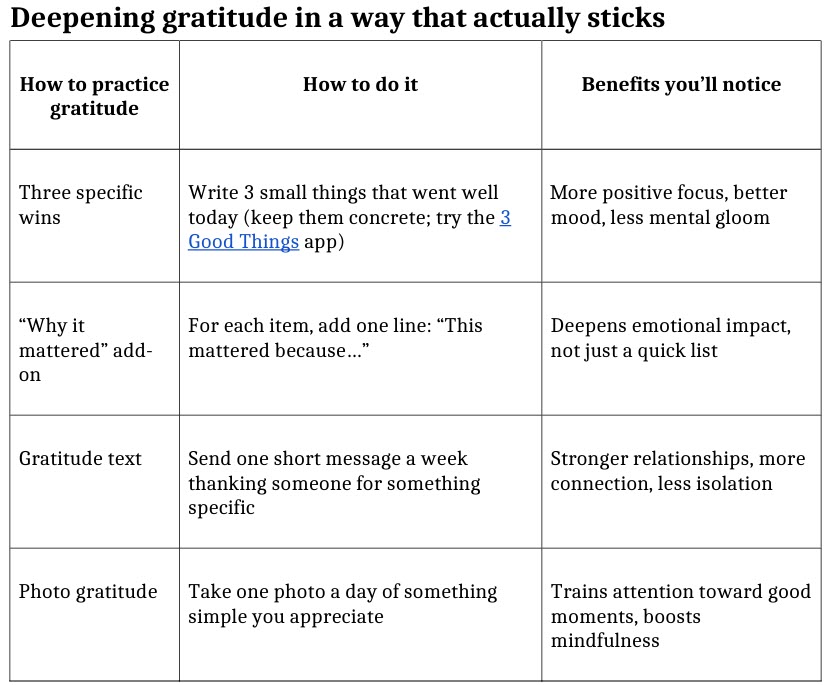
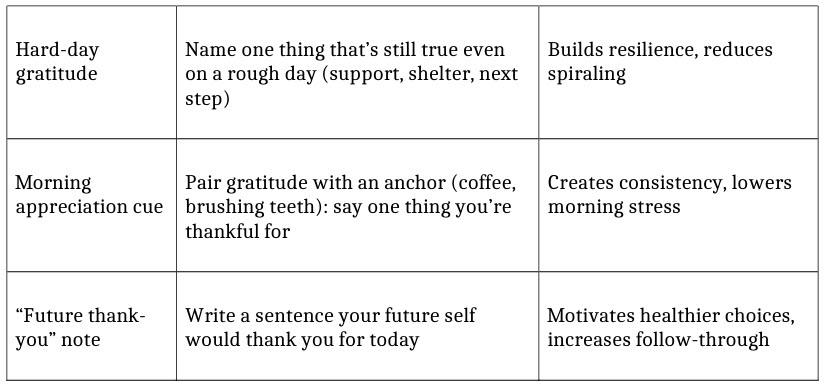
Deepening gratitude keeps life sweet
If you don’t train your focus, it can start to feel like life is mostly problems.Practicing
gratitude doesn’t deny hardship; it helps balance the picture by reminding you of what’s still good, stable, and worth protecting. Overtime, that shift can lower stress, improve mood, strengthen relationships, and make it easier to stay hopeful and present instead of
stuck in “what’s wrong” mode.
Usetriggers instead of relying on motivation
If your routine depends on feeling motivated, it won’t last. Use cues you already do every day.
Attach habits to existing anchors:
● Afterbrushingteeth →takevitamins, fill water bottle
● Aftermorningcoffee →5-minutestretch
● Afterdinner→shortwalk
● Afterputting kids to bed →preptomorrow’slunch
The cue does the work so your willpower doesn’t have to.
Make your environment do the heavy lifting
Self-care becomes easier when the healthier option is the easiest option.
Simple environment tweaks:
● Put walking shoes by the door
● Keep a water bottle in your main living space
● Prep a few “default meals” you can repeat
● Keep healthy snacks visible and convenient
● Remove one friction point (unfollow stress content, delete one app, turn off
nonessential notifications)
You’re not trying to be disciplined—you’re trying to be supported.
Build “minimum”versions for tough days
Consistency is easier when you plan for low-energy days. Create a minimum standard you can hit even whenlife is messy.
Examples:
● Workout goal→minimum: 10-minute walk
● Cooking goal→minimum:s impleprotein+fruit
● Meditation goal →minimum: 60 seconds of breathing
● Journaling goal →minimum: 3sentences
Minimums protect momentum.
Protect your energy like it’s part of the goal
Your goals won’t stick if you’re constantly depleted. Energy is the invisible fuel behind
every healthy habit.
Small energy protectors:
● Set a consistent wake time most days
● Build a “wind-down” routine that signals sleep
● Eat earlier in the day if late meals disrupt sleep
● Take mini breaks(even 2 minutes) to reset your nervous system
A calmer body makes better choices.
A quick“keep it going” checklist
☐Pick 1–2 goals for the next 30 days
☐Define a minimum version for hard days
☐Attach the habit to a daily cue
☐Track simply( 3–4 days/week counts)
☐Protect sleep and energy as part of the plan
☐Adjust the environment so the good choice is easier
Wrap-up
Keeping up with wellbeing goals is less about motivation and more about design. Choose
fewer goals, make them specific, and build minimum versions you can do on busy days. Use
cues and simple tracking so your system carries you when willpower fades. And keep
learning—fresh insight can renew your commitment and help your self-care evolve as your life changes.
by Leslie Campos